
The mission of the IEEE Women in Engineering Distinguished Lecturers Program (virtual) is to help enhance the professional knowledge and vitality of IEEE Women in Engineering members by apprising them of the latest industry trends, research results, and their practical applications. The Distinguished Lecturers Program highlights IEEE WIE’s partnership with the Societies/Council Program.
This program will allow IEEE WIE Affinity Groups to virtually invite the lecturers to speak at their events. IEEE WIE hopes that the wealth of knowledge these distinguished lecturers possess will help enrich WIE Affinity Group events and strengthen IEEE WIE’s endeavor to provide support to its members.
Find below a list of lecturers who have consented to offer their time and talent to virtually speak at IEEE WIE Affinity Groups’ meetings/seminars/panel discussions.
Aerospace & Electronic Systems Society

Maria Sabrina Greco (R8)
Talk Topics:
1. Sea & Land Clutter Statistical Analysis & Modeling
2. Advanced Techniques of Radar Detection in Non-Gaussian Background
3. Cognitive Radar
Maria Sabrina Greco
Talk Topic:
1.Sea & Land Clutter Statistical Analysis & Modeling
2.Advanced Techniques of Radar Detection in Non-Gaussian Background
3.Cognitive Radar
Abstract:
1. The modeling of the clutter echoes is a central issue for the design and performance evaluation of radar systems. Main goal of this lecture is to describe the state-of-the-art approaches to the modeling and understanding of land and sea clutter echoes and their implications on performance prediction and signal processors design. The lecture first introduces radar sea and ground clutter phenomena, measurements and measurement limitations, at high and low resolution, high and low grazing angles with particular attention to classical model for RCS prediction. Most part of the lecture will be dedicated to modern statistical and spectral models for high resolution sea and ground clutter and to the methods of experimental validation using recorded data sets. Some comparison between monostatic and bistatic sea clutter data will be provided together with some results on non-stationarity analysis of the high-resolution sea clutter.
2. For several decades, the Gaussian assumption on the disturbance modeling in radar systems has been widely used to deal with detection problems. But, in modern high-resolution radar systems, the disturbance cannot be modelled as Gaussian distributed, and the classical detectors suffer from high losses. In this talk, after a brief description of modern statistical and spectral models for high-resolution clutter, coherent optimum and sub-optimum detectors, designed for such a background, will be presented and their performance analyzed against a non-Gaussian disturbance. Different interpretations of the various detectors are provided that highlight the relationships and the differences among them. After this first part, some discussion will be dedicated to how to make adaptive the detectors, by incorporating a proper estimate of the disturbance covariance matrix. Recent works on Maximum Likelihood and robust covariance matrix estimation have proposed different approaches such as the Approximate ML (or Fixed-Point) Estimator or the M-estimators. These techniques allow to improve the detection performance in terms of false alarm regulation and detection gain in SNR. Some of results with simulated and real recorded data will be shown.
3. Over the past fifteen years, “cognition” has emerged as an enabling technology for incorporating learning and adaptivity on both transmit and receive to optimize or make more robust the radar performance in dynamic environments. The term ‘cognitive radar’ was coined in 2006, but the foundations of the cognitive systems date back several decades to research on knowledge-aided signal processing, and adaptive radar design. The main element of cognitive radar systems is the ‘perception-action cycle’, that is the feedback mechanism between receiver and transmitter that allows the radar system to learn information about a target and its environment and adapt its transmissions so as to optimize one or more missions, according to a desired goal. But a truly cognitive radar should not be only able to adapt on the fly its transmission waveforms and parameters based on internal fixed rules and on what learned about the environment, but it should also be able to optimize these rules learning with time from its mistakes, as some biological system does. And this is still a big challenge for radar experts. This talk will provide an overview of the main concept, of methods for modeling cognitive processes in a radar system and of some application example. Some insights into future directions of research will be provided as concluding remarks.
Circuits & Systems Society

Alysaa Apsel (R1)
Talk Topic: Ubiquitous, Seamless, and Future Proofed: How Wireless Circuits Can Push IoT
Alysaa Apsel
Talk Topic:
- Ubiquitous, Seamless, and Future Proofed: How Wireless Circuits Can Push IoT
Abstract:
In 2021 the number of IoT devices reached 46 billion, a 200% increase over the number in 2016*. By 2030 this number is expected to jump to 125 billion. While the FCC and other regulators have added licensed and unlicensed spectrum across several bands over the past few years to accommodate these new users, the need for increased wireless capacity and radios that can quickly adapt to new standards remains. Needless to say, the RF circuit designer has a significant role to play in solving these problems. As the market continues to grow, regulating bodies in various countries will undoubtedly continue to work to free up and reallocate spectrum and users will continue to find more ways to use that spectrum. Users will need both short reach and low power IoT devices that can operate independently and share spectrum as well as new WiFi and cellular radios that can quickly adapt to new environments and standards. In this talk I will look at several unconventional approaches to making radios flexible. I will examine how to add flexibility to the RF front end itself to accommodate changing standards and environments while keeping design and circuit costs low. I will show techniques for both broadband and tunable narrowband systems that can enable flexibility while maintaining high performance. Finally, I will look at an approach from the network side, of how to use a hardware support to build functional low power networks that can communicate point to point in a scalable fashion. Using such radios can reduce communication bottlenecks in centralized systems as well as enable more devices and sensors with greater flexibility. With these examples I will discuss the potential for future flexible analog RF designs and the current limits of this approach.
Communications Society

Michele Nogueira (R9)
Talk Topic: Data Science for Cybersecurity: An Overview Focused on Networking
Michele Nogueira
Dr. Nogueira is an Associate Professor in the Computer Science Department at the Federal University of Minas Gerais (UFMG), Brazil. She received her doctorate in Computer Science from the University Pierre et Marie Curie – Sorbonne Université, France. She was on sabbatical leave at Carnegie Mellon University, USA (2016-2017). Her research interests include wireless networks, cybersecurity, and network resilience. She has worked on providing resilience to self-organized, cognitive, and wireless networks through adaptive and opportunistic approaches. Dr. Nogueira was one of the pioneers in addressing survivability issues in self-organized wireless networks, and the work “A Survey of Survivability in Mobile Ad Hoc Networks” is one of her prominent scientific contributions. She has received Academic Scholarships from the Brazilian Government in her undergraduate and graduate years and international grants such as the ACM SIGCOMM Geodiversity program. She has served as Associate Technical Editor for the IEEE Communications Magazine and the IEEE ComSoc Internet Technical Committee chair. She is an ACM and IEEE Senior Member.
Talk Topic:
- Data Science for Cybersecurity: An Overview Focused on Networking
Abstract:
Cyberattacks are constantly ravaging valuable data, wasting time and costly resources, and negatively affecting the reputation of companies and institutions worldwide. Big, high-profile organizations have suffered the consequences of cyberattacks with a high impact on the organizations themselves, their customers, collaborators, and society. WannaCry and other ransomware software are still a threat that affects computers, encrypting data and demanding ransom payments in Bitcoin cryptocurrency. Another example is sophisticated versions of Distributed Denial-of-Service attacks (DDoS attacks), launched from Internet-connected devices — such as IP cameras, residential gateways, and baby monitors, cause major Internet platforms and services to be unavailable to many users worldwide. These examples highlight the power and potential of cyberattacks, revealing a constant improvement and sophistication in attacking strategies. Cybersecurity is no longer what it used to be; we are in the era of ubiquitous systems, and we expect more than 75 billion devices or smart things to be connected by 2025. We observe the design of different solutions to tackle this problem, for instance, digital passports for seamless entry at Dubai Airport, supported by blockchain technology, expecting it to stand as proof of all the transactions on the network. However, how is academia addressing the sophistication of cyberattacks? Can we anticipate the next moves of attackers to protect our information assets? How could academia benefit from the data generated in the network to create security intelligence and prevent attacks? This talk intends to elicit a discussion around these questions and present an overview of correlated research developed by Dr. Nogueira’s research team and future directions in these topics.

Damla Turgut (R3)
Talk Topic: Physical and computational modeling of smart homes
Damla Turgut
Dr. Turgut is Charles Millican Professor of Computer Science at the University of Central Florida (UCF). She is the co-director of the AI Things Laboratory. She held visiting researcher positions at the University of Rome “La Sapienza”, Imperial College of London, and KTH Royal Institute of Technology, Sweden. Her research interests include wireless ad hoc, sensor, underwater, vehicular, and social networks, edge/cloud computing, smart cities, smart grids, IoT-enabled healthcare and augmented reality, as well as considerations of privacy in the Internet of Things. Dr. Turgut serves on several editorial boards and program committees of prestigious ACM and IEEE journals and conferences. Her most recent honors include the NCWIT 2021 Mentoring Award for Undergraduate Research (MAUR), the UCF Research Incentive Award, and the UCF Women of Distinction Award. Since 2019, she serves as the N2Women Board Co-Chair where she co-leads the activities of the N2Women Board in supporting female researchers in the fields of networking and communications. She is an IEEE ComSoc Distinguished Lecturer, IEEE Senior Member, and the Chair-Elect of the IEEE Technical Committee on Computer Communications (TCCC).
Talk Topic:
- Physical and computational modeling of smart homes
Abstract:
Novel “smart” technologies such as smart homes, smart grids, variable pricing, and local energy markets promise both better overall efficiency for the providers, a greener home, and lower prices. However, they also create unexpected problems. During the February 2021 North-American Ice Storm, the deregulated energy market in Texas came dangerously close to collapse, leading to rolling brownouts and loss of service in many homes that relied on electric power for heating. As a response, the variable pricing system shot up to $5000 per kilowatt hour, generating very high bills for customers who did not lose service. This behavior penalized customers but did nothing to help in the ongoing crisis. Although it did not happen on this occasion, a controller that would sell the home’s energy reserves to take advantage of the high pricing would be even more dangerous for customers facing freezing temperatures. The lesson we can learn from these events is that “smart” systems must be extensively tested, including for black swan events for which no previous data is available. In this talk, we discuss the need for extensive modeling and simulation for all the components of such homes, including the physical environment, the smart controllers, the behavior of the humans, and the external environment, including the smart grids and local energy market to which the systems connect.
Computer Society
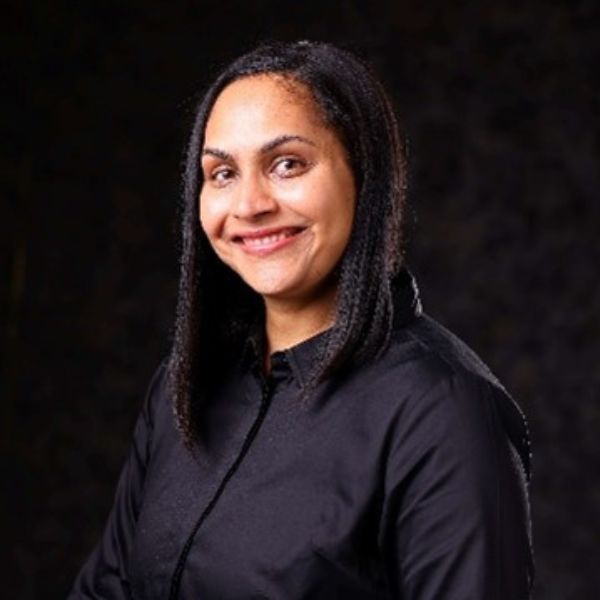
Mrinal Karvir (R6)
Talk Topic: Generative AI: From Concept To Deployment
Mrinal Karvir
As Senior AI Software Engineering Manager at Intel Corporation, Mrinal leads teams that develop innovative AI solutions. Her work has been recognized with innovation awards at CES and The Edge AI and Vision Alliance. As an Ethical AI Champion, she advocates for responsible AI practices through talks, panel discussions, and mentorship. She serves as Secretary and Board of Governors member for the IEEE Computer Society and is Vice Chair of IEEE Santa Clara Valley Women in Engineering. Mrinal is also an IEEE Distinguished Speaker on GenAI and Responsible AI. She frequently serves on judging panels and as a speaker at AI conferences. She has received the Pathfinder Award from Society of Women Engineers (SWE) for her professional achievements and community outreach and has been featured in the SWE “Women Engineers You Should Know” special section.
Talk Topic:
- Generative AI: From Concept To Deployment
Abstract:
As generative AI (GenAI) technologies advance, their impact on industries from healthcare to entertainment is undeniable, with a projected market value exceeding $110 billion by 2030. Gaining an understanding of GenAI solutions is crucial, not just for tech professionals but for anyone looking to stay relevant in an increasingly AI-driven world. We will walk through the core aspects of building GenAI solutions, covering foundational AI models, the art of prompt engineering, and the technical considerations for selecting Large Language Models (LLMs). Engaging in hands-on demonstrations will bring the technology to life. We will address significant challenges and risks, showcasing the dual-edged nature of these technologies. Ethical considerations will be at the forefront, emphasizing the necessity of responsible innovation. Through real-world examples, attendees will gain a clear understanding of GenAI’s potential and
pitfalls, equipped to navigate and contribute responsibly to this rapidly evolving field.

Jyotika Athavale (R6)
Talk Topic: Automotive Functional Safety and Predictive Maintenance
Jyotika Athavale
Jyotika is a RAS Director in the CTO office at Synopsys, leading quality, reliability and functional safety research, pathfinding and architectures for in-field silicon health use cases. Prior to Synopsys, she held Principal Engineer and Lead Technologist roles at Intel Corporation and NVIDIA, leading corporate-wide RAS and Functional Safety architectures across application domains.
Jyotika also serves as the 2024 President of the IEEE Computer Society, overseeing overall IEEE-CS programs and operations. She leads and influences several international standardization initiatives in the area of RAS/functional safety across Standards Development Organizations, in collaboration with IEEE. Jyotika led the development of the IEEE 2851-2023 standard on Functional Safety Data Format for Interoperability. She now chairs the IEEE P2851.1 standardization initiative on Functional Safety interoperability with reliability. She is also the standards column editor of IEEE Computer Society’s flagship magazine – Computer.
Jyotika is a Professional Member of the IEEE Honor Society (Eta Chapter of the Board of Governors). For her leadership in international safety standardization, Jyotika was awarded the 2023 IEEE SA Standards Medallion. And for her leadership in service, she was awarded the IEEE Computer Society Golden Core Award in 2022. In 2024, Jyotika was awarded the IEEE Women in Technology and Leadership Award for outstanding contributions to engineering and technology, the empowerment of diverse populations and the advancement of women in STEM.
Jyotika is an appointed member (Industrial Expert) of the Board of Studies for the Department of Computer Engineering and Information Technology at VJTI, Mumbai. She is also recognized as a Distinguished Alumna of her alma mater. She has authored patents and many technical publications in various international conferences and journals. Jyotika has also pioneered and founded international IEEE conferences in the field of dependable technologies for automotive and data centers.
Talk Topic:
- Automotive Functional Safety and Predictive Maintenance
Abstract:
To address the challenges and risks associated with AI technologies in the context of automotive functional safety, there has been a growing effort recently in the development of newer standards for dependable computing. This tutorial will discuss the new topics being addressed in ISO 26262, IEEE P2851 and several other recent international standardization efforts in the area of silicon health and automotive functional safety. It will cover the usage of predictive maintenance methods in safety critical automotive systems, including future technology trends for silicon health in the context of automotive use cases. In addition, the tutorial will highlight the significance of Silicon Lifecycle Management (SLM) technologies in enhancing functional safety and addressing the associated challenges.
Control Systems Society

Maria Domenica Di Benedetto (R8)
Talk Topic: Diagnosability of hybrid dynamical systems
Maria Domenica Di Benedetto
Maria Domenica Di Benedetto is a Professor of Automatic Control at University of L’Aquila (Italy). She received her Master degree in Electrical Engineering and Computer Science from University of Roma “La Sapienza” and holds the PhD degree (“Docteur-Ingenieur” Spécialité Automatique et Traitement du Signal) and the degree “Doctorat d’Etat ès Sciences” (Spécialité Sciences Physiques), both from Université de Paris-Sud (Orsay, France). She has been Adjunct Professor from 1995 to 2002, and McKay Professor from 1990 to 1995, at the Department of EECS of the University of California at Berkeley. She held visiting positions at MIT, at the University of Michigan Ann Arbor, and at the Ecole Nationale Supérieure de Mécanique in Nantes (France). Her research interests are in the areas of nonlinear and hybrid systems control theory, diagnosability and predictability in cyber-physical systems, and applications to traffic control, smart grids and biological systems. From 2001 to 2019, Prof. Di Benedetto has been the Director of the Italian Center of Excellence for Research DEWS “Architectures and Design methodologies for Embedded controllers, Wireless interconnect and System-on-Chip” established at the University of L’Aquila in 2001. She has been the President of the Italian Association of Researchers in Automatic Control (SIDRA) from 2013 to 2019. She is the President of the European Embedded Control Institute since 2009. Dr. Di Benedetto is a Fellow of the IEEE and IFAC. She has been a member of the IEEE Control Systems Technical Fields Award Committee, Chair of the Standing Committee on Fellow Nominations of the IEEE CSS, member of the IEEE Fellow Evaluation Committee of the IEEE CSS. She is the IFAC Chair of the Nathaniel B. Nichols Medal Selection Committee for the 2020-2023 triennium. She is currently a Distinguished Lecturer of the IEEE CSS and is serving as the VP for Membership Activities (2020-21) in the Executive Committee of the IEEE CSS. She is Editor of the IEEE Press Book Series in Control Systems Theory and Applications.
Talk Topic:
- Diagnosability of hybrid dynamical systems
Abstract:
Hybrid systems, i.e., heterogeneous systems that include discrete and continuous-time subsystems, have been used to model control applications e.g. in automotive control, air traffic management systems, smart grids and intelligent manufacturing. Failure in this kind of applications can cause irreparable damage to the physical controlled systems and to the people who depend on it, or may cause large direct and indirect economic losses. Therefore, security for hybrid systems represent a significant concern. In this respect, observability and diagnosability play an important role since they are essential in characterizing the possibility of identifying the system’s hybrid state, and in particular, the occurrence of specific states that may correspond to malfunctioning due to a fault or an adversarial attack. In this talk, I review and place in context how the continuous and the discrete dynamics, as well as their interactions, intervene in the observability and diagnosability properties of a general class of hybrid systems. I also illustrate under which conditions the hybrid system’s state can be correctly estimated even when the system is under attack. An example related to network topology changes due to faults or attacks will illustrate the results.

Emilia Fridman (R8)
Talk Topics:
1. Using Delays for Control
2. Constructive Methods for Robust Control of Distributed Parameter Systems
Emilia Fridman
Emilia Fridman received the M.Sc. degree from Kuibyshev State University, USSR, in 1981 and the Ph.D. degree from Voronezh State University, USSR, in 1986, all in mathematics. From 1986 to 1992 she was an Assistant and Associate Professor in the Department of Mathematics at Kuibyshev Institute of Railway Engineers, USSR. Since 1993 she has been at Tel Aviv University, where she is currently Professor of Electrical Engineering-Systems. She has held visiting positions at the Weierstrass Institute for Applied Analysis and Stochastics in Berlin (Germany), INRIA in Rocquencourt (France), Ecole Centrale de Lille (France), Valenciennes University (France), Leicester University (UK), Kent University (UK), CINVESTAV (Mexico), Zhejiang University (China), St. Petersburg IPM (Russia), Melbourne University (Australia), Supelec (France), KTH (Sweden). Her research interests include time-delay systems, networked control systems, distributed parameter systems, robust control, singular perturbations and nonlinear control. She has published two monographs and more than 200 articles in international scientific journals. She serves/served as Associate Editor in Automatica, SIAM Journal on Control and Optimization and IMA Journal of Mathematical Control and Information. In 2014 she was Nominated as a Highly Cited Researcher by Thomson ISI. Since 2018, she has been the incumbent for Chana and Heinrich Manderman Chair on System Control at Tel Aviv University. She is IEEE Fellow since 2019. In 2021 she was recipient of IFAC Delay Systems Life Time Achievement Award and of Kadar Award for outstanding research in Tel Aviv University. She is currently a member of the IFAC Council.
Talk Topic:
- Using Delays for Control
- Constructive Methods for Robust Control of Distributed Parameter Systems
Abstract:
1. In this talk by “using delays” I understand either Time-Delay Approaches to control problems (that originally may be free of delays) or intentional inserting delays to the feedback. I will start with an old Time-Delay approach – to sampled-data control. In application to network-based control with communication constraints, this is the only approach that allows treating transmission delays larger than the sampling intervals. I will continue with “using artificial delays” via simple Lyapunov functionals that lead to feasible LMIs for small delays and to simple sampled-data implementation. Finally I will present a New Time-Delay approach – this time to Averaging. The existing results on averaging (that have been developed for about 60 years starting from the works of Bogoliubov and Mitropolsky) are qualitative: the original system is stable for small enough values of the parameter if the averaged system is stable. Our approach provides the first quantitative bounds on the small parameter making averaging-based control (including vibrational and extremum seeking control) reliable.
2. Many important plants (e.g. flexible manipulators or heat transfer processes) are governed by partial differential equations (PDEs) and are often described by models with a significant degree of uncertainty. Some PDEs may not be robust with respect to arbitrary small time-delays in the feedback. Robust finite-dimensional controller design for PDEs is a challenging problem. In this talk two constructive methods for finite-dimensional control will be presented: Spatial decomposition (or sampling in space) method, where the spatial domain is divided into N subdomains with N sensors and actuators located in each subdomain; Modal decomposition method, where the controller is designed on the basis of a finite-dimensional system that captures the dominant dynamics of the infinite-dimensional one. Sufficient conditions ensuring the stability and performance of the closed-loop system are established in terms of simple linear matrix inequalities that are always feasible for appropriate choice of controllers. We will discuss delayed and sampled-data implementations as well as application to network-based deployment of multi-agents.

Sandra Hirche (R8)
Talk Topics:
1. Online Learning Control for Personalized Robotic Rehabilitation and Assistance
2. High Performance control for Robots in Extreme Environments
3. “To Sample or not to Sample?” – Efficient Online Learning in Closed Loop Control Systems with Guarantees
Sandra Hirche
Sandra Hirche holds the TUM Liesel Beckmann Distinguished Professorship and heads the Chair of Information-oriented Control in the Faculty of Electrical and Computer Engineering at Technical University of Munich (TUM), Germany (since 2013). She received the diploma engineer degree in Aeronautical and Aerospace Engineering in 2002 from the Technical University Berlin, Germany, and the Doctor of Engineering degree in Electrical and Computer Engineering in 2005 from the Technische Universität München, Munich, Germany. From 2005 – 2007 she has been a Post Doc Fellow of the Japanese Society for the Promotion of Science at the Fujita Laboratory at Tokyo Institute of Technology, Japan. Prior to her present appointment she has been an Associate Professor at TUM. Her main research interests include learning, cooperative, and networked control with applications in human-robot interaction, multi-robot systems, and general robotics. She has published more than 200 papers in international journals, books and refereed conferences. She has received multiple awards such as the Rohde & Schwarz Award for her PhD thesis, the IFAC World Congress Best Poster Award in 2005 and – together with students – Best Paper Awards of IEEE Worldhaptics and IFAC Conference of Maneuvering and Control of Marine Craft in 2009 and the Outstanding Student Paper Award of the IEEE Conference on Decision and Control 2018. In 2013 she has been awarded with an ERC Starting Grant on the “Control based on Human Models” and in 2019 with the ERC Consolidator Grant on “Safe data-driven control for human-centric systems”. Sandra Hirche is Fellow of the IEEE and received the IEEE Control System Society Distinguished Member Award. She has served as IEEE Control System Society (CSS) Vice-President for Member Activities (2014/15), as Chair for Student Activities in the IEEE CSS (2009-2014), as Chair of the CSS Awards Subcommittee on “CDC Best Student-Paper Award” (2010-2014), and has been elected member of the Board of Governors of IEEE CSS (2010-2013). She has been Co-Chair of the IFAC TC 1.5 “Networked Control Systems” (2010-2017).
Talk Topic:
- Online Learning Control for Personalized Robotic Rehabilitation and Assistance 2. High Performance control for Robots in Extreme Environments 3. “To Sample or not to Sample?” – Efficient Online Learning in Closed Loop Control Systems with Guarantees
Abstract:
One of the central societal challenges is to prolong independent living for elderly and promote well. Personalized robotic rehabilitation and assistance is considered one of the enabling technologies with control design playing a significant role. Focusing on sensorimotor rehabilitation and assistance, personalized control should be able to adapt to the high inter-personal variability in human motor behavior but also to intra-personal changes over time. Control adaptation is further challenged by the sparsity of person-specific data because calibration routines need to be brief for user acceptance. Above all, guaranteed safety is one of the key requirements. In this talk we will present recent results on learning-based control with performance and safety guarantees for highly uncertain systems with particular focus on challenges arising from personalized rehabilitation and assistance. In order to achieve high sample efficiency as well as transparency of the system, available knowledge of dynamic models will be exploited and and augmented by Bayesian non-parametric model components. Epistemic uncertainty due to limited training data will explicitly be taken into account in the control design in order to achieve uncertainty-aware behavior of the closed loop system. Online learning as well as realtime capabilities are further important aspects discussed in this talk. The results will be demonstrated in user intention-driven shared control designs for upper limb rehabilitation and assistance with exoskeletons.
2. One of the central societal challenges is to prolong independent living for elderly and promote well. Personalized robotic rehabilitation and assistance is considered one of the enabling technologies with control design playing a significant role. Focusing on sensorimotor rehabilitation and assistance, personalized control should be able to adapt to the high inter-personal variability in human motor behavior but also to intra-personal changes over time. Control adaptation is further challenged by the sparsity of person-specific data because calibration routines need to be brief for user acceptance. Above all, guaranteed safety is one of the key requirements. In this talk we will present recent results on learning-based control with performance and safety guarantees for highly uncertain systems with particular focus on challenges arising from personalized rehabilitation and assistance. In order to achieve high sample efficiency as well as transparency of the system, available knowledge of dynamic models will be exploited and and augmented by Bayesian non-parametric model components. Epistemic uncertainty due to limited training data will explicitly be taken into account in the control design in order to achieve uncertainty-aware behavior of the closed loop system. Online learning as well as real time capabilities are further important aspects discussed in this talk. The results will be demonstrated in user intention-driven shared control designs for upper limb rehabilitation and assistance with exoskeletons.
3. Online learning in closed loop control systems is very attractive because it allows the automated identification of highly nonlinear dynamical systems as well as a fast adaptation to dynamically changing environments. Yet, depending on the application the data collection and the training of models is costly if not even prohibitive. On the one hand, the training is computationally expensive and might compromise real-time performance. In particular in non-parametric learning approaches as e.g. in Gaussian Processes, the computational tractability is tied to the number of training data. As such it is important to understand how informative training samples are and further how to improve algorithmic efficiency of training and prediction. In this talk we will demonstrate that the control task in addition to the underlying system dynamics has a strong influence on the required sample complexity. Employing Bayesian principles, we explore methods to quantify epistemic uncertainty with respect to control objectives and how they can be exploited to achieve a high sample efficiency for learning in the closed loop system. Additionally, approaches for efficient non-parametric online learning algorithms are proposed to allow the application of the presented methods under real-time constraints.
Electron Devices Society

Mukta Farooq (R1)
Talk Topic: 3D Technology Overview, 3D Integration and Die Stacking
Mukta farooq
Dr. Mukta Farooq is a metallurgist and materials scientist, with expertise in 3-Dimensional and Heterogeneous Integration and Packaging, die and wafer level stacking, CMOS FET back end of line structures, flip-chip/C4/Cu pillar technology, lead-free alloys, chip package interaction, and intellectual property development. Mukta is currently the Heterogeneous Integration Leader for the AI Hardware Center at IBM Research. She has over 208 issued patents, and was named an IBM Lifetime Master Inventor and a member of the IBM Academy of Technology. She has received an outstanding technical achievement award for leadership in 3D Integration, and multiple high value patent awards. She has authored several external publications, given invited talks, and taught short courses. Mukta is an IEEE Fellow, a Distinguished Alumna of IIT Bombay, an EDS Distinguished Lecturer, Chair of the IEEE EDS Mid-Hudson Valley Chapter, and an active contributor to Women in Engineering. Mukta received her BS from IIT Bombay, MS from Northwestern University, and PhD from Rensselaer Polytechnic Institute.
Talk Topic:
- 3D Technology Overview, 3D Integration and Die Stacking
Abstract:
While silicon scaling has reached astonishing levels over the last half century, there has not been a corresponding level of scaling in electronic packaging technology. What is the reason behind these divergent evolutionary paths? And why is that we are now starting to see changes? More specifically, what is driving this shift from classical packaging to Heterogeneous Integration, and why has it become the mantra for High Performance Computing? This seminar will discuss these questions with a view to shedding light on the reasons behind the paradigm shifts, and the methods by which these are achieved. We will also review the essence of TSV (Through Silicon Via) and 3D process technology, which are critical elements of Heterogeneous Integration.
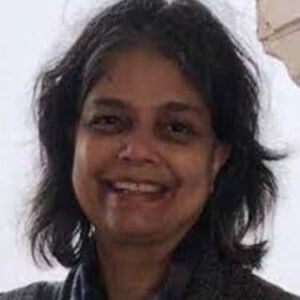
Merlyne De Souza (R8)
Talk Topic: Negative Capacitance beyond Ferroelectric FETs
Merlyne De Souza
Maria Merlyne De Souza received her PhD from the University of Cambridge. She became Professor of Electronics and Materials at the Emerging Technologies Research Centre, De Montfort University in 2003 and Professor of Microelectronics at the University of Sheffield in 2007. She has been a technical and executive committee member of IEEE- IEDM between 2012-2017 and IRPS 2003-2013 and is technical co-chair of ESSDERC/ESSCIRC ‘23. She has published over 110 journal papers and 180 conferences.
Talk Topic:
- Negative Capacitance beyond Ferroelectric FETs
Abstract:
This talk will discuss present-day challenges facing scaling of the MOSFET, leading to the concept of negative capacitance. We will showcase the phenomenon of negative capacitance beyond ferroelectric materials. The benefits in memory applications present opportunities for highly energy efficient neuromorphic computing systems of the future.
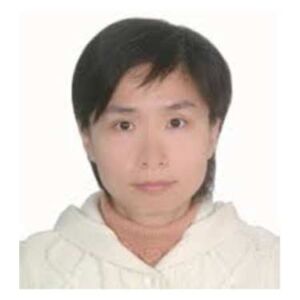
Pei Wen Li (R1)
Talk Topic: The Wonderful World of Designer Germanium Quantum-Dot Transistors
Pei Wen Li
Pei Wen Li (Senior Member, IEEE) received her Ph.D. degree in electrical engineering from Columbia University in New York City in 1994. Since 2015, she is a Professor in the Institute of Electronics at National Chiao Tung University (NCTU) (as National Yang Ming Chiao Tung University (NYCU) in 2021). Prior to joining NCTU in 2015, she was a Distinguished Professor, Chair of Electrical Engineering Department, and Director of Nano Science and Technology at National Central University. She was a Research Visiting Scholar at Caltech in 2011−2012. She worked with Vanguard International Semiconductor Corporation on DRAM technology integration in 1995- 1996. Her research themes focus on experimental germanium nanostructures and devices, encompassing quantum-dot single-electron transistors, photodetectors, light emitters, and thermoelectric devices, making use of self-assembly nanostructures in silicon integration
technology. She has published more than 300 technical journal and conference papers and holds 8 patents.
Dr. Li is an IEEE Distinguished Lecturer and has served on the VLSI Technology and Education committees of IEEE Electron Devices Society. She has been an editor of IEEE Journal of Electron Device Society since 2022 and an editorial board member of Applied Physics A, Springer since 2020. She is a senior member of the IEEE Electron Device Society and serves on various IEEE conference committees (Silicon Nanoelectronics Workshop (SNW) and Electron Devices Technology and Manufacturing (EDTM) Conference).
Talk Topics:
The Wonderful World of Designer Germanium Quantum-Dot Transistors
Abstract:
Since the inception of the first transistors in the 1940s, the enormous investment and immense body of research on Group IV semiconductors, including silicon (Si) and germanium (Ge), have spearheaded spectacular and rapid advances in ULSI technology enabling a vast landscape of applications including logic, memory, computing, and sensing, etc. Although Ge was the initial semiconductor of choice for both research and industry, it was quickly superseded by Si as the active-layer material of choice for both bipolar junction transistors and MOSFETs. However, more recently, Ge-based nanoelectronics is making a comeback. In particular, Ge nanophotonics is breaking new ground as the enabling technology for Si photonics applications. Cutting-edge research on semiconductor quantum dots (QDs) has opened up access to wide-ranging applications in electronics, photonics, quantum computing, and sensing. The “holy grail” for device manufacturing is to achieve scalability through precise control and repeatable fabrication of QDs with desired shapes, sizes, and ac-curate placement for predictable electrical and optical proper-ties. A Bohr radius of 5 nm in Si dictates the fabrication of ultrasmall Si QDs, which are difficult to controllably produce using either self-assembly or lithographic techniques. In contrast, a large Bohr radius of 25 nm in Ge enables easier modification of electronic structures using Ge QDs, imposing less stringent demands on lithographic control. Starting with our remarkable discovery of spherical Ge QD formation, we have embarked on an exciting journey of further discovery, all the while maintaining CMOS-compatible processes. We have taken advantage of the many peculiar and symbiotic interactions of Si, Ge and O interstitials to create a novel portfolio of electronic, photonic and quantum computing devices. This talk summarizes several of these completely new and counterintuitive accomplishments. Using a coordinated combination of lithographic patterning and self-assembly, sizetunable spherical Ge QDs were controllably placed at designated spatial locations within Si-containing layers. We exploited the exquisite control available through the thermal oxidation of Si1-xGex patterned structures in proximity to Si3N4/Si layers. Our so-called “designer” Ge QDs have succeeded in opening up myriad device possibilities, including paired QDs for qubits, single-hole transistors (SHTs) for charge sensing, phototransistors for Si sensing, and junctionless FETs using standard Si processing.
Electromagnetic Compatibility Society

Karen Burnham (R4)
Talk Topic: Noise Sources in Electric Vehicles
Karen Burnham
Karen Burnham is a Principal Scientist at Electro Magnetic Applications in Denver, CO. She is an iNARTE certified EMC engineer with experience in both the aerospace/defense and automotive industries. At NASA JSC, she worked on the Orion spacecraft and pyrotechnic systems. She was able to work on the Dream Chaser spacecraft and the F-35 fighter jet. She spent several years working at Ford Motor Company on traditional vehicles like the Ford Edge and Lincoln Continental as well as on their line of electric hybrid vehicles such as the Ford Explorer and Lincoln Aviator. Ms. Burnham is a member of the IEEE EMC Society Board of Directors where she serves as Assistant Vice President of Standards. She holds a BS degree in Physics from Northern Arizona University and an MS degree in Electrical Engineering from University of Houston.
Talk Topic:
- Noise Sources in Electric Vehicles
Abstract:
With electric vehicles becoming more common, the electromagnetic noise they generate is an issue that more designers must face. Ms. Burnham brings lessons learned from several years of troubleshooting electric vehicles, both hybrid and plug in, to discuss some of the most important EV noise factors.
Geoscience & Remote Sensing Society

B.S. Daya Sagar (R10)
Talk Topics:
1. Research on the Development of Mathematical Morphology-Based Algorithms for Geoscience
2.Remote Sensing and Geospatial Data Sciences
B.S. Daya Sagar (R10)
B. S. Daya Sagar (M’2003, SM’2003) is a Professor (Higher Administrative Grade, HAG) of the Systems Science and Informatics Unit (SSIU) at the Indian Statistical Institute, and Head of the Indian Statistical Institute – Bangalore Centre. Sagar received the M.Sc and Ph.D degrees from the Faculty of Engineering, Andhra University, Visakhapatnam, India, in 1991 and 1994 respectively. He is also the first Head of the SSIU. Earlier, he worked in College of Engineering, Andhra University, and Centre for Remote Imaging Sensing and Processing (CRISP), The National University of Singapore in various positions during 1992-2001. He served as Associate Professor and Researcher in the Faculty of Engineering & Technology (FET), Multimedia University, Malaysia during 2001-07. His research interests include mathematical morphology, GISci, digital image pro-cessing, fractals and multifractals their applications in extraction, analyses, and modeling of geophysical patterns. He has published over 90 papers in journals, and has authored and/or guest edited 14 books and/or special theme issues for journals. He authored a book entitled “Mathematical Morphology in Geomorphology and GISci,” CRC Press: Boca Raton, 2013, p. 546. He co-edited a special issue on “Filtering and Segmentation with Mathematical Morphology” for IEEE Journal on Selected Topics in Signal Processing (v. 6, no. 7, p. 737-886, 2012). His recent book on “Handbook of Mathematical geosciences: Fifty Years of IAMG”, Springer Publishers, p. 942, 2018 crossed the downloads of over one million. He edited a two-volume Encyclopedia of Mathematical Geosciences (Springer Nature, 1756 pages) and was released in 2023. He is an elected Fellow of Royal Geographical Society (1999), Indian Geophysical Union (2011), Indian Academy of Sciences (2022), Indian National Science Academy – INSA (2024), and was a member of New York Academy of Science during 1995-96. He received Dr. Balakrishna Memorial Award from Andhra Pradesh Akademi of Sciences in 1995, Krishnan Gold Medal from Indian Geophysical Union in 2002, and ‘Georges Matheron Award-2011 (with Lecturership)” of International Association for Mathematical Geosciences (IAMG), IAMG Certificate of Appreciation – 2018, and the IEEE Geoscience and Remote Sensing (GRSS) Distinguished Lecturer (DL) since 2020. Hs is a Member of Honors and Recognition Committee of the American Geophysical Union (AGU) for 2022-25. He is the Founding Chairman of Bangalore Section IEEE GRSS Chapter. He is on the Editorial Boards of Computers & Geosciences (Elsevier), Frontiers: Environmental Informatics, Mathematical Geosciences (Springer). More details about him can be seen at http://www.isibang.ac.in/~bsdsagar
Talk Topic:
- Research on the Development of Mathematical Morphology-Based Algorithms for Geoscience
- Remote Sensing and Geospatial Data Sciences
Abstract:
Data available at multiple spatial/spectral/temporal scales pose numerous challenges to the data scientists. Of late researchers paid wide attention to handling such data acquired through various sensing mechanisms to address intertwined topics-like pattern retrieval, pattern analysis, quantitative reasoning, and simulation and modeling-for better understanding spatiotemporal behaviors of several terrestrial phenomena and processes [1]. Georges Matheron and Jean Serra of the Centre of Mathematical Morphology, Fontainebleau founded Mathematical Morphology (MM) [2]-[5]. Since the birth of MM in the mid-1960s, its applications in a wide-ranging disciplines have illustrated that intuitive researchers can find varied application-domains to extend the applications of MM. Mathematical Morphology is one of the better choices to deal with the aforementioned intertwined topics. Various original algorithms and techniques that are mainly based on mathematical morphology have been developed and demonstrated. This lecture that presents an overview of mathematical morphology and their applications in geosciences, remotely sensed satellite data and Digital Elevation Model (DEM) processing and analysis, as well as geospatial data sciences, would be useful for those with research interests in image processing and analysis, remote sensing and geosciences, geographical information sciences, spatial statistics, and mathematical morphology, mapping of earth-like planetary surfaces, etc. The content of this broad overview of the lecture will be offered in two parts. In the first part, basic morphological transformations would be covered. An overview of the applications of those transformations, covered in the first part, to understand the granulometries, morphological filtering, morphological interpolations and extrapolations would be given with several case studies during the second part.
Industrial Applications Society

Sri Niwas Singh (R10)
Talk Topic: Predictive Control “When to use and when not?
SriNiwas Singh
Prof Sri Niwas Singh obtained his M. Tech. and Ph. D. in Electrical Engineering from Indian Institute of Technology Kanpur, in 1989 and 1995. Presently, Prof Singh is Director, Atal Bihari Bajpayee- Indian Institute of Information Technology and Management Gwalior (MP), India (on leave from Professor (HAG), Department of Electrical Engineering, Indian Institute of Technology Kanpur, India). Before joining IIT Kanpur as Associate Professor, Dr Singh worked with UP State Electricity Board as Assistant Engineer from 1988 to 1996, with Roorkee University (now IIT Roorkee) as Assistant Professor from 1996 to 2000 and with Asian Institute of Technology, Bangkok, Thailand as Assistant Professor from 2001 to 2002. He was Vice-Chancellor of Madan Mohan Malviya University of Technology Gorakhpur during April 2017 to July 2020.
Dr. Singh received several awards including Young Engineer Award 2000 of Indian National Academy of Engineering (INAE), Khosla Research Award of IIT Roorkee, and Young Engineer Award of CBIP New Delhi (India), 1996. Prof Singh is receipt of Humboldt Fellowship of Germany (2005, 2007) and Otto-monsted Fellowship of Denmark (2009-10). Prof Singh became first Asian to receive 2013 IEEE Educational Activity Board Meritorious Achievement Award in Continuing Education. He is also recipients of INAE Outstanding Teacher Award 2016 and IEEE R10 region (Asia-Pacific) Outstanding
Volunteer Award 2016. Dr. Singh is appointed as IEEE Distinguish Lecturer of Power & Energy Society from 2019 and Industry application Society for 2019-2021. He is also recipient of NPSC 2020 Academic Excellence Award and 2021 IEEE Industry Application Society (IAS) Outstanding Educator/ Mentor
Award. His research interests include power system restructuring, FACTS, power system optimization & control, security analysis, wind power, etc. Professor Singh has published more than 550 papers (h-index=61, Citation=14k+) in international/national journals/conferences and supervised 42 PhD (9 PhD under progress).
He has also written 33 book chapters, 13 Edited books and 2 text-books one on Electric Power Generation, Transmission and Distribution and second is Basic Electrical Engineering, published by PHI, India. Prof Singh has completed three dozen of technical projects in India and abroad. His two NPTEL (YouTube) video lectures on HVDC Transmission and Power System Operation & Control are very popular. Prof Singh was Chairman, IEEE UP Section for 2013, 2014, IEEE R10 (Asia-Pacific) Conference & Technical Seminar Coordinator 2015-18 and R10 Vice-Chair, Technical Activities (2019-2020).
Presently Dr. Singh is IEEE PES R10 PES Chapters Chair Representative West Zone (India). Dr Singh is Fellow of IEEE (USA), IET (UK), INAE, IE(I), AAIA, AIIA, IETE, AvH.
Talk Topic:
Predictive Control “When to use and when not?
Abstract:
Switching losses contribute the major portion to the total losses in medium voltage drives. Operation at extremely low switching frequency is therefore mandatory. Low harmonic current distortion can be nevertheless maintained when predictive current control is used. Predictive current control is currently attracting the interest of many researchers. Even specific conferences are being organized on this novel topic. The predictive algorithm directly generates the firing pulses of the inverter, thus eliminating a pulse width modulator. A preset magnitude of the current error is permitted, defined as the magnitude difference between reference and actual current space vectors.
Inverter gate pulses are generated such as to maximize the time differences between any two switching instants. This minimizes the switching frequency, and thus the switching losses. Harmonic current distortion is held at a predetermined value. A gate pulse is generated whenever a predefined current error
is exceeded. That error is computed as the difference between reference and actual current space vector.
The next switching state is then determined such that maximum time elapses until the error vector exceeds its limit again. This minimizes the switching frequency and also the switching losses.
Overmodulation and a smooth transition to full-wave operation produces maximum inverter output voltage. The error vector is represented here in a rotor field oriented coordinate system and different error magnitudes are permitted in the respective axes.
Industrial Electronics Society

Gerard-Andre Capolino (R8)
Talk Topic: Modern design and manufacturing of induction machines for transportation electrification
Gerard-Andre Capolino
Gérard-André Capolino (A’1977, M’1982, SM’1989, F’2002, LF’2019) was born in Marseille (France). He received a BSc in electrical engineering from Ecole Centrale de Marseille, Marseille (France) in 1974, an MSc from CentraleSupelec, Paris, France in 1975, a Ph.D. from Aix-Marseille University, Marseille, France in 1978 and a DSc from Institut National Polytechnique de Grenoble, Grenoble, France in 1987. He held positions at the University of Yaoundé I, Cameroon, the University of Dijon, Dijon, France, and the Mediterranean Institute of Technology, Marseille, France. In 1994, he joined the University of Picardie “Jules Verne” in Amiens, France as a Full Professor, Head of the Department of Electrical Engineering (1995-1998), Director of the Energy Conversion & Intelligent Systems Laboratory (1996-2000) and Director of the European Master in Advanced Power Electrical Engineering (MAPEE) recognized by the European Commission (2004-2021). He was elevated to the rank of Chair Professor in 2013. Since September 2021, he has been appointed Emeritus Professor of Electrical Engineering in the same University and the same research lab. He is the founder of the consulting company GAC Conseils. He has been the recipient of the following distinctions: the IEEE-IES Eugene Mittelman Achievement Award in 2008, the ICEM Arthur Ellison Outstanding Achievement Award in 2010, the IEEE-PELS Diagnostics Achievement Award in 2011, the ICEM John Tegopoulous Outstanding Service Award in 2016, the IEEE-PES Cyril Veinott Electromechanical Conversion Award in 2017 and the IEEE France Section Distinguished Service Award in 2018. More than 20 DLs have been given by him till date worldwide.
Talk Topic:
1. Modern design and manufacturing of induction machines for transportation electrification
Abstract:
Transportation electrification is far to be a new topic of investigation but it has received a massive interest in the last 15 years due to the need to save energy and limit the emission of polluted gases. On the other hand, electrical machines are just considered prime movers of this means of transportation for bikes/cars/trucks, trains, ships, and even aircraft.
The aim of this lecture is to cover a large range of technologies to better understand the modern design of induction machines used for propulsion in the transportation area. No need to highlight that these machines will be always used in what is called embedded systems and the machine terminals will never be directly connected to the power grid. This last fact will always be the starting point of the design and will be the line of specific data to be considered.
After an introduction to the historical background of induction machines from principles to early manufacturing of prototypes, the classical rotating field motors/generators have been widely described. Then, the presentation has been oriented towards the modern design of induction machines for transportation. By starting from specifications, these techniques take into account electromagnetic, thermal, mechanical, material, application, and even manufacturing problems. Each part has been developed and many examples from the propulsion of vessels, cars, and aircraft have been presented. The modern design has been developed in terms of multiphysics approaches taking into account all the problems previously presented. Of course, a large part of the presentation has been based on computer-aided design from methods to well-known software. The last part of the presentation has been dedicated to the manufacturing process. All aspects of this process have been developed from material (magnetic, conduction, insulation, heat extraction, mechanical mounting) to the final outcome. For each part, several illustrative examples have been shown.
Instrumentation & Measurement Society
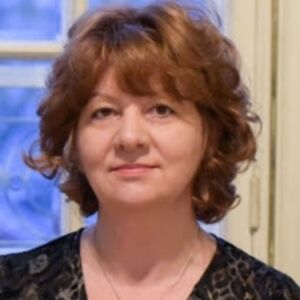
Mihaela Albu (R8)
Talk Topic: High Reporting Rate Measurements for Smart[er] Grids
Mihaela Albu
Mihaela M. Albu (M’96, SM’07) is from Craiova, Romania. She graduated from “Politehnica” University of Bucharest (UPB) in 1987 and holds the Ph.D. degree (1998) from the same university. Since 2002 she is a Professor of Electrical Engineering at UPB. Teaching activity presently counts: Advanced Topics in Instrumentation and Measurement (Master); Smart Distribution Grids (Master); Signal Processing (Bachelor) at the Dept. of El. Engineering of UPB; and “Elektrische Meßtechnik”; “Sensoren” at the German Department of UPB. Her research interests include wide area measurement systems as well as synchronized measurements and evaluation of the associated uncertainty considered in the state estimation algorithms; smart energy grids including optimal use of renewables and real time control; smart metering technologies; DC grids as an innovative solution for future intelligent grids, for which a demonstration platform was realized in a fully equipped laboratory fed from a DC bus at 230 V rated voltage and a proposal of power quality assessment in DC grids; power quality and signal processing for power quality assessment, nonlinear phenomena in power systems; distributed and computer-controlled measurement systems, IEEE and IEC standards in power, power system protection, virtual and Internet-based laboratories. She is the founder of an interdisciplinary group MicroDERLab at UPB, and coordinates several research teams working on projects funded by national and international grants. Dr. Albu was spending a leave at Arizona State University as a Fulbright Fellow 2002 – 2003 and in 2010. Her work includes coordination of a monograph (on measurements in power systems ), 7 Book chapters; 21 Journal Publications; more than 70 papers published in International Conference Proceedings; 40 presentations, invited papers and other non-refereed publications; 13 Laboratory notes, and more than 50 Technical Reports (recently on smart grids topics); Since 2009 she is Vice-Chair of the Intellicis -Working Group 2: Reliable management and control of electric power systems, 2009-2013. The professional service is highlighted by active membership in IEEE – IMS, CIGRE, VDE, and IRE (Romanian Power Engineers Society).
As an IEEE member, she volunteers for the Instrumentation and Measurement Society since 2009, while she became part of the AdCom. She is also involved in the IEEE local activities –as a vice-chair of the PES-Romania Chapter and contributes to the dialogue between the Romanian electrical engineering community and the IEEE. Distinguished Lecturer (2020 – 2022); Chapter Chair|| I&M AdCom (2013-2016, 2009-2012)|| VP Membership (2010-2011)|| VP Technical & Standards Activities (2012-2013)|| IEEE Region 8 Chapter Coordination Subcommittee (2011)|| Smart Grid Initiative (2015-2017)|| Education Committee/Faculty Course Development Award Selection Committee (2016-2017)|| Distinguished Lecturer (2016 – 2019).
Talk Topic:
- High Reporting Rate Measurements for Smart[er] Grids
Abstract:
Modern control algorithms in the emerging power systems process information delivered mainly by distributed, synchronized measurement systems, and available in data streams with different reporting rates. Multiple measurement approaches are used: on one side, the existing time-aggregation of measurements are offered by currently deployed IEDs (SCADA framework), including smart meters and other emerging units; on the other side, the high-resolution waveform-based monitoring devices like phasor measurement units (PMUs) use high reporting rates (50 frames per second or higher) and can include fault-recorder functionality. There are several applications where synchronized data received with a high reporting rate has to be used together with aggregated data from measurement equipment having a lower reporting rate (complying with power quality data aggregation standards) and the accompanying question is how adequate are the energy transfer models in such cases. For example, state estimators need both types of measurements: the so-called “classical” one, adapted for a de facto steady-state paradigm of relevant quantities, and the “modern” one, i.e. with fewer embedded assumptions on the variability of same quantities. Another example is given by emerging active distribution grids operation, which assumes higher variability of the energy transfer and consequently, a new model approximation for its characteristic quantities (voltages, currents) is needed. Such a model is required not only in order to be able to correctly design future measurement systems but also for better assessing the quality of existing “classical” measurements, still in use for power quality improvement, voltage control, frequency control, network parameters’ estimation, etc. The main constraint so far is put by the existing standards where several aggregation algorithms are recommended, with a specific focus on the information compression. The further processing of RMS values (already the output of a filtering algorithm) results in significant signal distortion. Presently there is a gap between (i) the level of approximation used for modeling the current and voltage waveforms which are implicitly assumed by most of the measurement devices deployed in power systems and (ii) the capabilities and functionalities exhibited by the high fidelity, high accuracy and a high number of potential reporting rates of the newly deployed synchronized measurement units. The talk will address: o The measurement paradigm in power systems; System inertia, real-time and steady-state Instrument transformers; limited knowledge on the infrastructure PQ, SCADA, and PMUs Power system state estimation; WAMCS IEDs, PMUs, microPMUs Time-stamped versus synchronized measurements o Measurement channel quality and models for energy transfer Voltage and frequency variability; rate of change of frequency The steady-state signal and rapid voltage changes (RVC); RMS-values reported with 100 frames/s; Measurement data aggregation; filtering properties Time- aggregation algorithms in the PQ framework Statistical approaches; o Applications and challenges Communication channel requirements; delay assessment in WAMCS Smart metering with high reporting rate (1s) The presentation provides an overview of these techniques, with examples from worldwide measurement solutions for smart grids deployment.
Microwave Theory and Technology Society
Jasmin Grosinger (R8)
Talk Topic: RF Design for Sustainability
Jasmin Grosinger
Jasmin Grosinger is an Associate Professor at the Institute of Microwave and Photonic Engineering at Graz University of Technology in Austria. Her research is focused on sustainable wireless electronics and systems. She also works as a Visiting Associate Professor at the Graduate School of Engineering at Tohoku University, Japan. She is a Senior Member of IEEE and has co-authored several peer-reviewed publications, book chapters, and invention disclosures. For her PhD work, she received the first prize from the Industrial Union of the Austrian Automotive Industry’s Jubilee Foundation. In 2021, Jasmin received the Mind the Gap—Diversity Award from the Graz University of Technology. Since 2019, she has served as an Associate Editor for the IEEE Microwave and Technology Letters. Since 2023, she has chaired the Wireless Power Technologies (WPT) Journal Exploration Working Group (IEEE WPT Initiative). She is a member of the IEEE Microwave Theory and Technology Society (MTT-S) Technical Committees 25 (Wireless Power Transfer and Energy Conversion) and 26 (RFID, Wireless Sensors, and IoT). She has been recognized as a Distinguished Microwave Lecturer of MTT-S and is an Elected Voting Member of its Administrative Committee, chairing the Meetings and Symposia Committee since 2024.
Talk Topic:
- RF Design for Sustainability
Abstract:
In the talk, we will discuss radio frequency design solutions for wireless sensor and communication nodes to solve sustainability issues that arise with the digitalization of the economy and society due to the massive deployment of wireless nodes on environmental, economic, and societal levels. Engineers can apply these design solutions to improve the ultra-low-power operation of wireless nodes, avoid batteries’ eco-toxicity, and decrease maintenance costs due to battery replacement. The discussed solutions offer high integration levels based on system-on-chip and system-in-package concepts in low-cost complementary metal-oxide-semiconductor technologies to limit these nodes’ costs and carbon footprints. We will discuss, in particular, solutions for ultra-low-power wireless communication systems based on high-frequency and ultra-high frequency radio frequency identification (RFID) technologies.
Nuclear and Plasma Sciences Society

Sara Pozzi (R4)
Talk Topic: Neutron Detection in Proton Therapy for Cancer Treatment
Sara Pozzi
Professor Sara Pozzi earned her M.S. and Ph.D. in nuclear engineering at the Polytechnic of Milan, Italy in 1997 and 2001, respectively. She is a Professor in the Department of Nuclear and Radiological Sciences at the University of Michigan where she established and is the leader of the Detection for Nuclear Nonproliferation Group (DNNG). Her research interests include the development of new methods for nuclear materials detection, identification, and characterization for nuclear nonproliferation, safeguards, and national security programs. She is the recipient of many awards, including the 2006 Oak Ridge National Laboratory Early Career Award, 2006 Department of Energy, Office of Science, Outstanding Mentor Award, 2012 INMM Edway R. Johnson Meritorious Service Award, 2017 IEEE Distinguished Lecturer, 2018 Rackham Distinguished Graduate Mentoring Award, and 2021 American Nuclear Society Gail De Planque Award. She is a Fellow of the American Nuclear Society, the Institute of Nuclear Materials Management, and the IEEE.
Talk Topic:
- Neutron Detection in Proton Therapy for Cancer Treatment
Abstract:
Recent advances in nuclear detection capabilities, including new detection materials and readout electronics, promise to have an impact in the development of new cancer therapy treatments. I will present new neutron and photon detection techniques that will be used in instruments and algorithms for application in cancer treatment facilities. The urgent needs in this area include, but are not limited to, neutron dosimetry for proton therapy facilities and the evaluation of the biological damage to cells by neutron irradiation. Proton therapy facilities use high-energy proton beams to destroy cancerous cells. In this approach, secondary radiation is produced due to proton interactions with the body and surrounding materials. This secondary field, which includes both neutrons and photons, must be accurately characterized in order to determine its effect on patients and medical personnel. An interdisciplinary approach, including both simulation and experiments, is required to tackle these complex and urgent challenges
Reliability Society
Janet (Jing) Lin (R8)
Talk Topic: Revitalizing Bayesian Reliability: Bridging Traditions and Innovations Through Markov Chain Monte Carlo (MCMC) Approaches
Janet (Jing) Lin
Jing (Janet) Lin (Senior Member of IEEE) earned her Ph.D. in Management Science in 2008 from Nanjing University of Science and Technology, China. She currently works as a Guest Professor in the Division of Product Realization at Mälardalen University, Sweden, and as an Associate Professor in the Division of Operation and Maintenance at Luleå University of Technology, Sweden. Dr. Lin’s research primarily focuses on Prognostics and Health Management (PHM), Asset Management, and RAM4S (Reliability, Availability, Maintainability, Safety, Sustainability, Security, Supportability), as well as e-Maintenance. In addition to her academic pursuits, Professor Lin is currently serving as the Vice President of the IEEE Reliability Society. She played a pivotal role in establishing the IEEE Reliability Society’s Sweden and Norway joint section chapter in May 2021 and has been its Chair since its inception.
Talk Topic:
- Revitalizing Bayesian Reliability: Bridging Traditions and Innovations Through Markov Chain Monte Carlo (MCMC) Approaches
Abstract:
In this lecture, we explore the transformative power of Bayesian reliability analysis and its integration with Markov Chain Monte Carlo (MCMC) techniques. The session is structured around four key sections that guide us through this exciting domain.
We begin by examining the foundations of Bayesian survival analysis within the field of reliability, discussing its evolution and the pivotal role MCMC techniques have played in enhancing these methods. In the second section, we delve into an integrated procedure, detailing how Bayesian reliability can be seamlessly combined with MCMC to create robust models for real-world applications.
In the third part, theory meets practice through a series of case studies that showcase the wide-ranging applications of Bayesian reliability across various sectors. Finally, we turn our attention to the changing landscape of Bayesian reliability in the era of big data, exploring the challenges and opportunities that come with it.
This lecture offers a comprehensive understanding of Bayesian reliability, showing how the integration of traditional methods with innovative MCMC approaches provides valuable insights for future applications. Join us as we bridge past practices with modern advancements in this rapidly evolving field.
Sensors Council

Maryam Shojaei Baghini (R10)
Talk Topic: Energy Harvesting for Sensor Nodes and Custom On-chip Power Management
Bio →
Maryam Shojaei Baghini
Maryam Shojaei Baghini is a Professor in the Department of Electrical Engineering, IIT Bombay. Her research areas span from devices and sensors to the instrumentation circuits and sensor systems, energy harvesting circuits and systems, AMS and RF IC design. She is joint inventor of 41 granted Indian patents and 6 granted U.S. patents. She is joint author of 344 peer-reviewed journal and conference papers of which more than 80 papers are published in IEEE transactions and IEEE journals. She is listed in the Compendium on Woman Engineers of India since Independence by INAE (2023), TATA Trust Chair Prof. for Frugal Engineering (2020-2023), Distinguished Lecturer of IEEE Sensors Council (2022-2024), Qualcomm Faculty Awardee – India (2021), Listed as one of the 51 selected Women Achievers in STEM by CII India in 2021, INAE Fellow (from 2020) and IIT-Bombay Impactful Research Award in 2015 and 2008 along with several best paper award in the conferences. Detailed information is available here.
Talk Title: Energy Harvesting for Sensor Nodes and Custom On-chip Power Management
Abstract: Available energy in the ambient is an attractive source to harvest and utilize to power energy autonomous low-power small sensor modules. However, variability and low density of available power, transducer, overall size and cost, as well as custom on-chip power management with low energy and peak power overhead are the challenges. Examples of the ongoing research specifically in the domain of CMOS power management for microwaves RF energy harvesting and vibration energy harvesting will be presented.

Paola Saccomandi (R8)
Talk Topics & Bio →
Paola Saccomandi
Paola Saccomandi is Associate Professor at the Department of Mechanical Engineering of Politecnico di Milano (POLIMI), in the field of Thermal and Mechanical Measurements. She graduated with honours in Biomedical Engineering from Università Campus Bio-Medico di Roma in 2010, and obtained the PhD in 2014. In 2016 she moved to the Institute of Image-guided surgery of Strasbourg (France). In 2018 she joined the Department of Mechanical Engineering of POLIMI, where she currently holds an academic faculty position. She is now the Head of Laboratory of Measurements for Biomedical Applications. Main research interests of Paola and her team include quasi-distributed and distributed fiber optic sensors (FOSs) and imaging (e.g., magnetic resonance and hyperspectral imaging), and the development of light-based approaches for hyperthermal tumor treatment and monitoring. She is also working on SPR-based FOSs for biomolecules and environmental monitoring, and wearable devices embedding FOSs for physiological parameters monitoring during sport and for prosthetics. For the results of her research, in 2023 Paola has been listed among the world’s top 2% scientists. She was recipient of several awards, including Premio Italia Giovane, field Biomedicine, and best paper awards at IEEE conferences. She is the PI of two European Research Council (ERC) projects and Supervisor of Marie Skłodowska-Curie Actions Postdoctoral Fellowship. She is the PI and the Unit Responsible of several national grants, from Cariplo Fundation, the Italian Ministry of University and Research and National Institute for Insurance against Accidents at Work. During her PhD and postdoc, she coordinated many research projects funded by international grants (IHU Institute of Image Guided Surgery of Strasbourg, USIAS Institut d’Etudes Avancées de l’Université de Starsbourg) and has actively participated in Italian projects focused on sensors for biomedical applications. She has authored over 250 peer-reviewed publications related to sensors technology and application to the biomedical sector. She is Section Board Member for Sensors MDPI. She has been invited lecturer in many leading Institutions, including Technion (Israel), Sungkyunkwan University (South Korea), Politecnico di Torino, and organizations, like OPTICA (Biosensors Technical Group). Since 2012 she is member of IEEE and IEEE societies. Since 2020 she has been elevated to the grade of IEEE Senior Member. Currently, she is the elected Chair of the IEEE EMBS Technical Community on Therapeutic Systems & Technologies, the Chair of Women in Sensors (IEEE Sensors Council), and the elected vice-Chair of IEEE Women in Engineering (Italy AG). She is Co-founder and Officer of the IEEE Italy Sensors Chapter. She served as Technical Program Chair for MetroInd4.0&IoT 2020 and 2021, and for MeMeA 2021. She was Technical Program Committee member of 3 MeMeA eds. She organized 12+ workshops and special sessions at IEEE conferences, like EMBC, I2MTC, MetroInd4.0&IoT, MeMeA. She is Distinguished Lecturer for IEEE Sensors Council (2024-2026).
Abstract:
Lecture 1.
Energy-based image-guided interventions provide a minimally-invasive treatment option for cancer patients who may not be surgical candidates, with limited systemic toxicity, and the potential to synergize with other therapeutic modalities. Achieving optimal therapeutic outcomes relies on precise and conformal energy delivery localized to targeted tissues.
Small-size and flexible fiber optic sensors (FOSs) are increasingly entering in the design of minimally invasive medical devices. Technologies based on high-density Fiber Bragg Gratings (FBGs) or distributed sensing, based on Brillouin and Rayleigh scattering, allow for accurate and spatially resolved information along the entire length of a surgical instrument (pressure, strain, temperature), without the use of additional devices. Thus, recently, FOSs have emerged as optimal tool to control energy-based therapies, thus providing temperature monitoring with millimetric spatial resolution for thermal-based therapies for localized tumors.
This lecture will present emerging applications of FOSs for thermometry and feedback-controlled delivery of thermal treatments. FBGs and distributed sensors will be described and discussed for their capability to perform the accurate analysis of the thermal effects of medical devices for thermal therapies and to tune and validate organ-specific numerical models for the prediction of temperature distribution in biological tissues. Emerging application of FBGs for the investigation of the thermal response of nanomaterials intended for photothermal therapies will also be presented.
While FOSs allow measuring and controlling the tissue temperature distribution evolving during laser treatment, novel solutions are needed to directly monitor the thermal state of biological tissues. Thus, this lecture will also present an innovative hyperspectral imaging approach for monitoring and predicting the thermal state of biological tissues, using its optical “fingerprint” as sensor.
Lecture 2.
Sensing solutions based on optical-fiber technology exhibit numerous advantageous features, which make them ideally suited for a broad variety of applications in life sciences, medical monitoring and diagnostics. Fiber optic sensors (FOSs) are indeed characterized by small size (diameter in the order of tens to hundreds of µm), lightness, flexibility, high accuracy, intrinsic safety, compatibility with diagnostic systems, immunity to external electromagnetic fields, no voltage or current flow in the fiber, possibility of continuous monitoring, and multiplexing capabilities. These features are highly desirable for healthcare monitoring and application in the biomedical field.
Distributed and quasi-distributed sensing approach allow performing multipoint measurements with single interrogation units, and sensors can be easily embedded in medical devices. These sensors are mostly used for thermal and mechanical measurements of biomedical quantities, such as biomechanical parameters, pressure, and physiological or supraphysiological temperature reached during thermal therapies for cancer treatment. Moreover, the combination of the fiber optic technology with nanomaterials has opened the door to the design of novel sensors based on surface plasmon resonance or lossy mode resonance, which are mostly oriented to biosensing, and are studied to detect pathological cells or the presence of dangerous substances in the body and in living environments.
Thus, this lecture will present a broad spectrum of applications of FOSs to be used for healthcare applications, including: thermometry during thermal therapies in oncological field, the characterization of tissue thermal properties, the monitoring of prosthetic devices and development of 3D printed patches embedding fiber Bragg grating sensors to be used for fabrication of wearable systems for sport activities monitoring. FOS-based biosensing applications for the detection of biomolecules and environmental quantities will also be introduced and discussed.
Solid-State Circuits Society

Rabia Yazicigil Kirby (R1)
Talk Topic: All-In-One Data Decoders Using GRAND
Bio →
Rabia Yazicigil Kirby
Rabia Yazicigil is an Assistant Professor of ECE Department at Boston University and a Network Faculty at Sabanci University. She was a Postdoctoral Associate at MIT and received her Ph.D. degree from Columbia University in 2016. Her research interests lie at the interface of integrated circuits, bio-sensing, signal processing, security, and wireless communications to innovate system-level solutions for future energy-constrained applications. She has received numerous awards, including the NSF CAREER Award (2024), Early Career Excellence in Research Award for the Boston University College of Engineering (2024), the Catalyst Foundation Award (2021), Boston University ENG Dean Catalyst Award (2021), and Electrical Engineering Collaborative Research Award for her Ph.D. research (2016).
Dr. Yazicigil is an active member of the Solid-State Circuits Society (SSCS) Women-in-Circuits committee and is a member of the 2015 MIT EECS Rising Stars cohort. She was recently selected as an IEEE SSCS Distinguished Lecturer and elected to the IEEE SSCS AdCom as a Member-at-Large. Lastly, she serves as an Associate Editor of the IEEE Transactions on Circuits and Systems-I (TCAS-I) and on the IEEE ISSCC, RFIC, ESSCIRC, and DAC Technical Program Committees.
Talk Topic: All-In-One Data Decoders Using GRAND
Abstract: In 1948, Shannon stated that the best error correction performance comes at longer code lengths. In 1978, Berlekamp, McEliece, and Tilborg established that optimally accurate decoding of linear codes is NP-complete in code length, so there is no optimally accurate universal decoder at long code lengths. Forward error-correction decoding has traditionally been a code-specific endeavor. Since the design of conventional decoders is tightly coupled to the code structure, one needs a distinct implementation for each code. The standard co-design paradigm either leads to significantly increased hardware complexity and silicon area to decode various codes or restrictive code standardization to limit hardware footprint. An innovative recent alternative is noise-centric guessing random additive noise decoding (GRAND).
This approach uses modern developments in the analysis of guesswork to create a universal algorithm where the effect of noise is guessed according to statistical knowledge of the noise behavior or through phenomenological observation. Because of the universal nature of GRAND, it allows
efficient decoding of a variety of different codes and rates in a single hardware instantiation. The exploration of the use of different codes, including heretofore undecodable ones, e.g., Random Linear Codes (RLCs), is an interesting facet of GRAND. This talk will introduce universal hard-detection and soft-detection decoders using GRAND, which enables low-latency, energy-efficient, secure wireless communications in a manner that is future-proof since it will accommodate any type of code.

Carolina Mora Lopez (R8)
Talk Topic: Circuits and technologies for implantable biomedical devices
Carolina Mora Lopez
Carolina Mora Lopez received her Ph.D. degree in Electrical Engineering in 2012 from the KU Leuven, Belgium, in collaboration with imec, Belgium. From 2012 to 2018, she worked at imec as a researcher and analog designer focused on interfaces for neural-sensing applications. During this time, she was the lead analog designer and project leader of the Neuropixels development project which resulted in the conception and fabrication of the Neuropixels 1.0 and 2.0 neural probes. She is currently the principal scientist and team leader of the Circuits & Systems for Neural Interfaces team at imec, which develops circuits and technologies for electrophysiology, neuroprosthetics and BMI. Her research interests include analog and mixed-signal circuit design for sensor, bioelectronic and neural interfaces. Carolina is a senior IEEE member and serves on the technical program committee of the ISSC conference, ISSCC SRP, VLSI circuits symposium, and ESSCIRC conference.
Talk Topic:
- Circuits and technologies for implantable biomedical devices
Abstract:
Biological processes such as neuronal signaling and cell growth are among the most complex micro- and nano-scale processes in nature. Historically such processes have been studied at system level because there were no tools available to study individual components of the process. However, cellular-level interfacing is needed to provide better understanding of the brain and to develop more advanced prosthetic devices and brain-machine interfaces. With semiconductor technology innovations, much recent work has been focused on unraveling biological complexity, but also on driving new diagnoses, treatments and therapies that are tailored to the individual. One of the drivers behind those innovations is novel CMOS circuits enabling multi-modal, high-precision data collection and analysis at ultra-low power consumption. In this talk, I will present recent biomedical developments based on silicon technology, and I will discuss the requirements, materials, circuit techniques and design challenges of their ASIC and SoC platforms.

Farhana Sheikh (R6)
Talk Topic: FPGA-Chiplet Architectures and Circuits for 2.5D/3D 6G Intelligent Radios
Bio →
Farhana Sheikh
Dr. Farhana Sheikh is a Principal Engineer at Intel Programmable Solutions Group. She has over 15 years of experience in ASIC and DSP/communications research including adaptive DSP, crypto, graphics, quantum wireless control, and 5G+ wireless. Since joining PSG, after 10+ years in Intel Labs, Farhana’s research focuses on 2D and 3D chiplet + FPGA integration research, with a focus on 3D heterogeneous integration for next generation wireless and sensing applications. Farhana has published over 50 papers and filed 22 patents, has initiated the AIB-3D open-source specification for 3D chiplet heterogeneous integration. Farhana was instrumental in enabling Intel 16 for Intel’s IDM2.0 and is the co-creator of Intel University Shuttle Program. Outside of Intel she volunteers for IEEE Solid-State Circuits Society (SSCS) and is the SSCS Women in Circuits Committee Chair.
Farhana is a co-recipientof 2020, 2019, and 2012 IEEE ISSCC Outstanding Paper Awards. In 2021, Farhana was recognized for her mentorship work with students and faculty by the Semiconductor Research Corporation (SRC) that awarded her the 2021 Mahboob Khan Outstanding Industry Liaison Award. She is IEEE SSCS Member- at-Large for 2022-2024, and IEEE SSCS Distinguished Lecturer for 2023 and 2024.
Talk Topic: FPGA-Chiplet Architectures and Circuits for 2.5D/3D 6G Intelligent Radios
Abstract: The number of connected devices is expected to reach 500 billion by 2030, which is 59-times larger than the expected world population. Objects will become the dominant users of next-generation communications and sensing at untethered, wireline-like broadband performance, bandwidths, and throughputs. This sub-terahertz 6G communication and sensing will integrate security and intelligence. It will enable a 10x to 100x increase in peak data rates. FPGAs are well positioned to enable intelligent radios for 6G when coupled with high-performance chiplets incorporating RF circuits, data converters, and digital baseband circuits incorporating machine learning and security. This talk presents use of 2.5D and 3D heterogeneous integration of FPGAs with chiplets, leveraging Intel’s EMIB/Foveros technologies with focus on one emerging application driver: FPGA-based 6G sub-THz intelligent wireless systems. Nano-, micro-, and macro-3D heterogeneous integration is summarized, and previous research in 2.5D chiplet integration with FPGAs is leveraged to forge a path towards new 3D-FPGA based 6G platforms. Challenges in antenna, packaging, power delivery, system architecture design, thermals, and integrated design methodologies/tools are briefly outlined. Opportunities to standardize die-to-die interfaces for modular integration of internal and external circuit IPs are also discussed.
Systems Council

Sambit Bakshi (R10)
Talk Topic: The Rise and Rise of Biometric Systems
Sambit Bakshi
Sambit Bakshi is currently with the Department of Computer Science and Engineering, National Institute of Technology Rourkela, India. His area of interest includes visual surveillance, biometric security, multimedia forensics, and social security analysis. He presently serves as associate editor of IEEE Transactions on Computational Social Systems, IEEE Transactions on Technology and Society, IEEE Transactions on Education, IEEE Systems Journal, and some other journals. He previously served as associate editor of IEEE Access, IEEE IT Professional in the past. He is a senior member of IEEE. He is Founding Chair of IEEE Rourkela Subsection and IEEE Kolkata Section Biometrics Council Chapter. He serves as distinguished lecturer of IEEE Systems Council for 2023 – 2025. He has published widely in more than 100 journals and conferences.
Talk Topics:
- The Rise and Rise of Biometric Systems
Abstract:
Biometric technology has incepted during 1958 in a very non-scientific way while recording inked fingerprints of people on paper on a whim. Then biometric technology has been practiced and scientific basis were established during finding identity of Afgan Girl Sharbat Gula by National Geographic photographer McCurry and Prof. John Daugman. The talk will introduce the basic concepts of biometric security, beginning with the history of development of biometric technology and how it has become backbone of security in several daily-used products like personal computer or mobile phone. Apart from such applications, the talk will emphasis on how biometric helps to find criminals in FBI and how helps to recognize a person in India using the nation-wide database AADHAAR. Latest usage of deep learning techniques for achieving superior performances from biometric systems will also be highlighted in this talk.
Holly Handley (R2)
Talk Topic: Human System Engineering: From Human Views to Human Readiness Levels
Holly Handley
Holly A. H. Handley is a Professor in the Engineering Management and System Engineering Department of Old Dominion University (ODU). Her research focuses on developing models and methodologies to better represent the human component during the architecting and design of socio-technical systems. She is the author of The Human Viewpoint for System Architectures along with over 75 publications on topics of human system engineering. She received her PhD from George Mason University in 1999 and is a Licensed Professional Engineer. Her education includes a BS in Electrical Engineering from Clarkson College (1984), a MS in Electrical Engineering from the University of California at Berkeley (1987) and a MBA from the University of Hawaii (1995). Prior to joining ODU, Dr. Handley worked as a Design Engineer for Raytheon Company (1984-1993) and as a Senior Engineer for Pacific Science & Engineering Group (2002-2010). Dr. Handley is a member of the Institute of Electrical and Electronic Engineers (IEEE) Senior Grade, the International Council on System Engineers (INCOSE) and the Human Factors and Ergonomics Society. She is currently the chair of the IEEE Systems Council Women in Systems Engineering Committee and was recently named an HFES Science Policy Fellow (2018) and ODU Provost Fellow (2023).
Talk Topics:
- Human System Engineering: From Human Views to Human Readiness Levels
Abstract:
This talk discusses the role of Human System Engineering (HSE) within the System Engineering (SE) discipline. It describes two HSE initiatives that are enabling better integration of humans and systems. The Human Views comprise a system architecture viewpoint that provides a perspective on the human roles, activities and information flows required by a complex system. The Human Readiness Levels assess the degree to which human-focused requirements are incorporated into design decisions and the readiness of a system to interact with its human operator. Together these two efforts encourage SE for the total system by supporting a comprehensive integration of the human component into the systems engineering effort, which is critical to the design, development, and operation of successful systems.

Dr. Eren Kurshan (R1)
Talk Topic: Rebuilding AI: Hardware and Systems Approach for Next Generation AI and AGI
Eren Kurshan
Dr. Eren Kurshan is an AI researcher and technology executive focused on building AI systems for large-scale industrial use cases. Kurshan received her Ph.D. in Computer Science from the University of California, Los Angeles, as well as a Master’s in Computer Science and a Bachelor’s in Electrical Engineering. She currently serves as an Executive-in-Residence at Princeton University and the head of AI research and methodology at Morgan Stanley. Prior to these roles, she led a number of AI/ML and emerging technology programs at Columbia University, J.P. Morgan and IBM T.J. Watson Research Labs. She was a Visiting Fellow at Princeton’s Center for Information Technology Policy (2015-2016) and served as an Adjunct Professor at Columbia University since 2014.
Dr. Kurshan published over 70 peer reviewed technical publications and holds ~200 patents, with approximately 100 granted. She has served as an associate editor of several IEEE and ACM journals and transactions including the Transactions on Emerging Technology, Transactions on Computers and the Journal of Emerging Technologies in Computing. She was the recipient of 2 Best Technical Paper Awards from IEEE and ACM conferences, as well as top inventor and licensing awards from Bank of America and IBM. She received 2 Outstanding Research and Corporate Accomplishment Awards from IBM for her work on system design and optimization and emerging technology development respectively.
Talk Topics:
- Rebuilding AI: Hardware and Systems Approach for Next Generation AI and AGI
Abstract:
Artificial Intelligence encounters three grand challenges: The Energy Challenge, characterized by a troubling and unsustainable rise in training energy consumption; The Alignment Challenge, where jailbroken and misaligned AI pose significant safety and societal threats; and The AGI Challenge, involving the transition to Artificial General Intelligence, of fully integrated, coherently functioning modalities and higher level functions.
This lecture argues that effective tackling these challenges relies on system design. To enhance energy efficiency, it is essential to leave the current restrictive view of AI as a software only solution and embrace fully integrated system design and novel hardware technologies, such as neuromorphic computing. Addressing alignment challenges involves recognizing the pivotal role of system architecture in moral decision-making, echoing the human brain’s reliance on signal comparators, feedback mechanisms, and control functions, without which it will be nearly impossible to achieve alignment. System design also proves essential for advancing AGI solutions from multiple narrow AI models to integrated co-processing and high-level AGI functions.
UFFC Ultasound Ferroelectricity and Frequency Control

Susan Trolier-McKinstry (R2)
Talk Topic: Reliability of Piezoelectric Films for MEMS and Non-volatile Memory
Talk Topics & Bio →
Susan Trolier McKinstry
Susan Trolier-McKinstry is an Evan Pugh University Professor and Steward S.Flaschen Professor of Ceramic Science and Engineering, and Professor of Electrical
Engineering. Her main research interests include thin films for dielectric and piezoelectric applications. She directs both the Center for Dielectrics and Piezoelectrics and the Center for Three-Dimensional Ferroelectric Microelectronics. She is a member of the National Academy of Engineering, a fellow of the American Ceramic Society, IEEE, and the Materials Research Society, and an academician of the World Academy of Ceramics. She currently serves as an
associate editor for Applied Physics Letters.
She was 2017 President of the Materials Research Society; previously she served as president of the IEEE Ultrasonics, Ferroelectrics and Frequency Control Society, as well as Keramos.
Talk Title: Reliability of Piezoelectric Films for MEMS and Non-volatile Memory
Abstract: Thin films based on PbZr1-xTixO3 and K1-xNaxNbO3 are increasingly being commercialized in piezoelectric microelectromechanical systems (MEMS) due to the comparatively low drive voltages required relative to bulk actuators, as well as the facile approach to making sensor or actuator arrays. As these materials are incorporated into devices, it is critically important that they operate reliably over the lifetime of the system. This paper discusses some of the factors controlling the electrical and electromechanical reliability of PZT-based piezoMEMS films, as well as the critical measurement techniques required to fully characterize lifetime. A combination of thermally stimulated depolarization current, deep level transient spectroscopy, impedance spectroscopy, highly accelerated lifetime testing, and transmission electron microscopy is typically needed to fully characterize the mechanism for failure.
As one example, it will be shown the gradients in the Zr/Ti ratio through the depth of the films are useful in increasing the lifetime of the films under DC electrical stresses. Comparable defect-chemistry issues strongly affect the reliability of wurtzite-structured like Al1-xBxN,
Al1-xScxN, and Zn1-xMgxO thin films for non-volatile memory applications. Here, it will be shown that the defect chemistry, including nitrogen vacancies and oxygen on nitrogen sites affects the baseline conductivity, as well as its evolution as a function of bipolar cycling. Data on retention and wake-up of the films will also be presented.